

Uncategorized
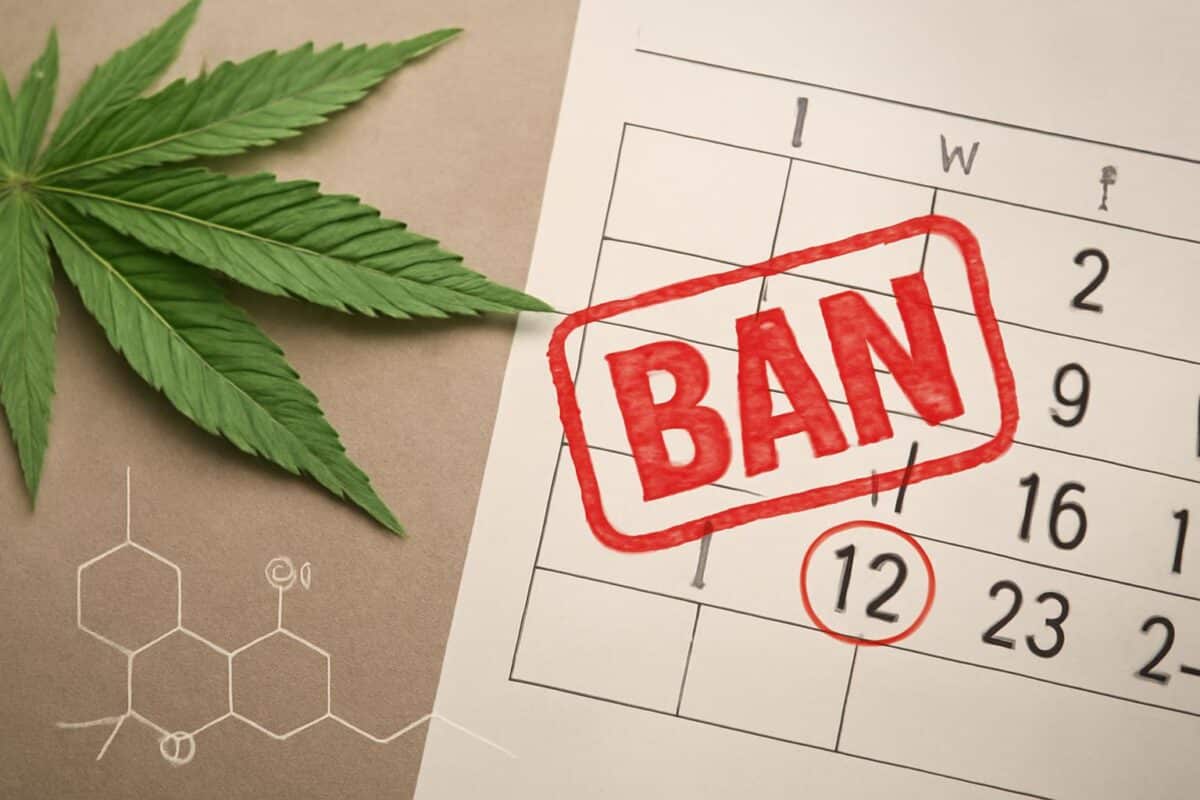
Synthetic Hemp Cannabinoid Ban Timeline: What the November 12 Deadline Means
Oct
Regulatory attention around cannabinoid products is entering a new phase. Recent reporting indicates that a federal ban on certain synthetic hemp cannabinoids is scheduled to take effect on November 12, 2026. The development has created uncertainty for consumers, retailers, manufacturers, and anyone trying to distinguish legal hemp products from substances sold as K2, Spice, or synthetic cannabis.
The terminology matters. “Hemp-derived cannabinoid,” “synthetic cannabinoid,” and “synthetic hemp cannabinoid” are often used interchangeably in online discussions, but they do not always describe the same thing. Products can differ substantially in chemistry, manufacturing method, potency, labeling, and legal treatment.
This guide explains the reported synthetic hemp cannabinoid ban timeline, why the November 12 date matters, and which practical questions consumers should ask before buying or using any cannabinoid or herbal product. It is general educational information, not legal, medical, or purchasing advice.
What is happening on November 12?
News reports published in late October 2026 describe a federal restriction on certain hemp-derived THC products and related synthetic or chemically converted cannabinoids taking effect on November 12. Other coverage indicates that lawmakers are discussing possible changes or alternatives after the upcoming elections, which means the policy environment may continue to shift.
That distinction is important: a reported effective date is not the same as a permanent, settled policy framework. Legislation, agency guidance, court action, enforcement priorities, and state rules can all affect how a restriction is interpreted. Consumers should avoid relying on a product page, social media post, or old blog article as proof that a product is legal everywhere.
For current background on the terminology and product categories commonly discussed online, readers can review the Herbal Spice Shop homepage. Product descriptions should never be treated as a substitute for checking the rules in the buyer’s jurisdiction.
Why hemp-derived products are being grouped into the debate
The 2018 federal hemp framework helped create a market for products containing cannabinoids derived from hemp, provided they met the applicable delta-9 THC threshold. Manufacturers later developed or commercialized a wider range of cannabinoids, including compounds made by chemically converting one cannabinoid into another.
Some of these products are marketed as alternatives to traditional cannabis. They may appear as gummies, drinks, vape cartridges, tinctures, flower, powders, or liquid formulations. Packaging may use terms such as “hemp-derived,” “legal THC,” “research use,” or “botanical blend.” Those labels can make products appear more uniform than they really are.
The current policy debate focuses on whether certain intoxicating hemp products fall outside the intended scope of hemp legalization. Lawmakers and regulators are also concerned about products that can be sold with limited testing, inconsistent potency information, or packaging that appeals to younger consumers.
Synthetic cannabinoids are not the same as ordinary hemp extracts
Traditional hemp extracts contain naturally occurring plant compounds, although processing can concentrate or modify the final formulation. By contrast, synthetic cannabinoids are laboratory-created chemicals designed to interact with cannabinoid receptors. Some are structurally unrelated to delta-9 THC, while others are chemically modified versions of naturally occurring cannabinoids.
The phrase synthetic cannabinoid is frequently associated with K2 and Spice products. Historically, these products involved laboratory-made compounds sprayed or infused onto dried plant material. They were often sold under changing brand names and labeled “not for human consumption.” That disclaimer did not make them safe, tested, or appropriate for ingestion or inhalation.
Newer hemp-market products may use different chemistry and branding, but the same safety concerns remain when a product has uncertain contents, poor batch documentation, or unusually high potency. A product being described as hemp-derived does not automatically establish that it is mild, predictable, or legal in every state.
The reported ban timeline at a glance
Late October 2026: heightened coverage
News coverage in late October highlighted the approaching federal deadline and the potential impact on hemp-derived THC businesses, beverage brands, supplement companies, retailers, and consumers. Some lawmakers have reportedly discussed legislative action that could alter or delay the effect of the restriction.
November 12, 2026: reported effective date
November 12 is being presented in current reporting as the date when the federal restriction would take effect. The practical consequences may depend on the final statutory language, agency interpretation, inventory rules, state law, and whether litigation or congressional action changes implementation.
After the deadline: continued uncertainty
Even if a federal restriction becomes effective, the market is unlikely to change overnight. Retailers may have existing inventory, states may apply different rules, and laboratories may need to update testing methods. Consumers should expect product availability, labeling, shipping policies, and retailer practices to change as businesses respond.
Anyone following the topic should check the publication date of an article and compare multiple current notices rather than relying on old claims such as “legal in all 50 states” or “federally approved.” The site’s post archive can help readers identify related coverage, but the most recent article is not necessarily the final legal word.
What the change could mean for consumers
Product availability may narrow
Some retailers may stop carrying products that could be affected by the new rules. Others may reformulate, change packaging, or limit sales to jurisdictions where the products remain permitted. A product disappearing from a store does not necessarily mean it was recalled, just as continued availability does not prove that it remains lawful.
Shipping policies may become stricter
Retailers and delivery companies may impose additional state exclusions, age-verification steps, or documentation requirements. Shipping a product across state lines can involve more than the law where the seller is located. The destination state, carrier policy, product composition, and federal rules may all matter.
Consumers should read a retailer’s current shipping and refund terms before ordering. Avoid assuming that discreet packaging, a domestic warehouse, or a familiar product name resolves legal or safety questions.
Labels may change without making products safer
Revised labels may include batch numbers, QR codes, cannabinoid percentages, or expanded warnings. These are useful signs of transparency, but a label alone cannot confirm the accuracy of the contents. Independent laboratory testing should identify the specific compounds, their concentrations, and potentially harmful contaminants.
How to evaluate a cannabinoid or herbal product responsibly
Whether a product is described as herbal incense, a hemp extract, a vape, a research chemical, or a legal high, consumers should use a careful checklist before making decisions.
- Look for a complete ingredient list. Vague terms such as “proprietary blend” or “herbal formula” make it difficult to assess exposure.
- Check for recent, product-specific laboratory results. A generic certificate or a report for a different flavor does not establish the contents of the item in hand.
- Confirm the testing laboratory. The report should identify the sample, batch, testing date, methods, and measured compounds.
- Be cautious with extreme potency claims. High-strength labels can increase the risk of unwanted effects and dosing mistakes.
- Check age restrictions and local laws. State and municipal rules may be stricter than federal standards.
- Avoid products with misleading disclaimers. “Not for human consumption” does not make a product safe to inhale, swallow, or apply.
- Do not combine unknown products. Mixing cannabinoids with alcohol, sedatives, stimulants, prescription medicines, or other psychoactive substances can create additional risks.
Readers looking for broader site navigation can use the available category list to distinguish general educational content from product-related pages. Regardless of category, product claims should be evaluated independently and cautiously.
Health risks associated with unpredictable synthetic cannabinoids
Synthetic cannabinoid effects can vary widely because different compounds may activate cannabinoid receptors with different strengths and durations. The same product name may also be used for different formulas over time. Uneven spraying or mixing can create “hot spots,” where one portion contains much more active material than another.
Reported adverse effects can include severe anxiety, agitation, confusion, hallucinations, vomiting, rapid heart rate, chest discomfort, seizures, loss of consciousness, and dangerous changes in body temperature. Serious symptoms require urgent medical attention. If someone has collapsed, is having a seizure, is struggling to breathe, or cannot be awakened, contact emergency services immediately.
Do not attempt to counteract severe effects with another substance or induce vomiting. If possible, keep the packaging available for medical professionals so they can identify the claimed ingredients and batch information.
Why “legal high” is an unreliable safety label
The phrase “legal high” describes a marketing category, not a toxicology standard. A substance can be legal in one location, temporarily unscheduled, sold under a loophole, or marketed for research while still carrying significant health risks. Legal status can also change quickly, especially when a compound is associated with poisonings or mislabeling.
The same caution applies to “research chemical.” Research chemicals are not automatically safer because they are sold with laboratory language. Products offered for research may be unsuitable for human use, and consumers should not interpret chemical names, purity percentages, or vendor claims as medical guidance.
What retailers and manufacturers should prepare for
Businesses operating in the cannabinoid or herbal product sector should review their inventory against the final legal language, document supplier testing, and maintain clear batch records. They should also confirm whether product claims, packaging, age gates, advertising, and shipping procedures comply with applicable rules.
Retailers should avoid relabeling an existing product without new testing. Changing a name from “synthetic cannabinoid” to “herbal incense” does not change the underlying chemistry or risk profile. Similarly, removing a cannabinoid from a title does not resolve a compliance issue if the compound remains in the formulation.
Transparent businesses should communicate policy changes clearly, publish accurate testing information, and provide a process for customers to ask questions. They should not encourage consumers to evade state restrictions or use products in ways contrary to the label.
What consumers should watch next
The most important developments will be the final wording of the federal measure, implementation guidance, state responses, court challenges, and any congressional proposal intended to modify the deadline. News coverage may use broad terms such as “cannabis ban” or “hemp ban,” but the actual effect will depend on definitions and thresholds in the applicable text.
Consumers should watch for official notices, updated retailer policies, product recalls, and laboratory findings rather than relying on viral posts. It is also wise to save receipts and product labels, avoid stockpiling unfamiliar compounds, and reconsider any product that lacks transparent ingredients or current batch testing.
Frequently asked questions
Is every hemp-derived cannabinoid a synthetic cannabinoid?
No. Hemp-derived products may contain naturally occurring cannabinoids, chemically converted cannabinoids, or mixtures of both. “Hemp-derived” describes the source claimed by the manufacturer; it does not provide a complete description of the chemistry or safety profile.
Does the November 12 date apply identically in every state?
Not necessarily. Federal requirements and state laws can overlap, and states may impose stricter restrictions. The final federal language, implementation guidance, and local rules should be reviewed before drawing conclusions about a specific product.
Are K2 and Spice the same as modern hemp THC products?
They are not automatically the same. K2 and Spice traditionally refer to products containing laboratory-made synthetic cannabinoids sprayed onto plant material, while modern hemp products may use different compounds and formats. However, both categories can involve misleading labels and unpredictable effects.
Can a certificate of analysis prove that a product is safe?
No. A valid certificate can provide useful information about tested compounds and contaminants, but it cannot guarantee that a product is safe for every person or lawful in every jurisdiction. The report should be current, batch-specific, and issued by a credible independent laboratory.
What should someone do after a bad reaction?
Seek urgent medical help for severe confusion, chest pain, seizures, breathing difficulty, extreme agitation, loss of consciousness, or any symptom that feels life-threatening. Keep the product packaging available and tell medical professionals what was taken, when it was used, and whether other substances were involved.
The practical takeaway
The reported November 12 deadline is an important marker, but it is not a reason to assume that every cannabinoid product will be treated identically. The key questions are what compound a product contains, how it was made, whether the batch was independently tested, where it is being sold, and which rules apply at the destination.
As the policy debate develops, cautious consumers should prioritize transparent labeling, current testing, reputable information, and compliance with local law. Synthetic cannabinoids and other unregulated psychoactive products can carry serious risks regardless of how they are branded or marketed.
