

Uncategorized
Synthetic Cannabinoids in Military Mail: What the Korea Smuggling Reports Reveal About Risk and Regulation
Nov
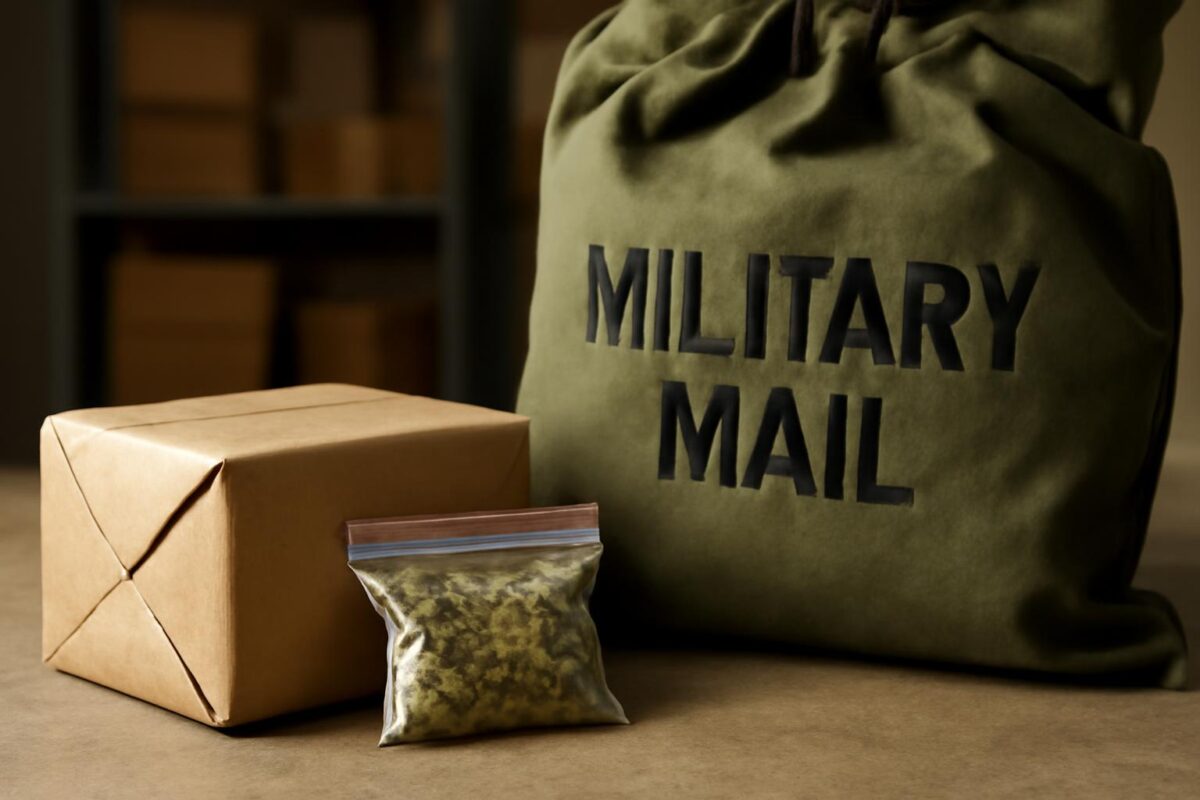
Reports published in early November 2026 alleging that U.S. service members attempted to move synthetic cannabinoids into South Korea through military mail have brought renewed attention to a familiar problem: products marketed as herbal incense, K2, Spice, or research chemicals can create serious legal and health consequences far beyond their packaging.
The cases remain allegations, and individual facts should be determined by the relevant authorities and courts. However, the broader lesson is clear. A product’s label, online description, or domestic availability does not establish that it is legal to possess, mail, import, or use somewhere else.
For consumers, travelers, service members, retailers, and anyone researching cannabinoid products, the Korea reports are a useful starting point for understanding why synthetic cannabinoids remain especially difficult to assess.
What the Korea reports are alleged to involve
Several news reports dated November 4 through November 6, 2026, describe allegations that synthetic cannabis products were sent into South Korea through military mail. The reporting differs in wording and detail, but the common theme is the alleged movement of products described as synthetic cannabinoids or synthetic drugs through a channel that is subject to strict inspection, customs, and military rules.
It is important not to treat early reporting as a final legal finding. Charges, investigations, and sentencing outcomes can change as evidence is reviewed. Still, the story illustrates how quickly a product associated with an online “herbal incense” market can become an international controlled-substance matter.
South Korea also has its own controlled-substance framework, military regulations, customs procedures, and rules concerning imported chemicals. Those rules may not align with the law in the product’s country of origin. A substance that is sold openly or described as a legal high in one jurisdiction may be prohibited in another.
Why synthetic cannabinoids create unusual legal uncertainty
Synthetic cannabinoids are laboratory-made compounds designed to interact with cannabinoid receptors. They are not one single substance. Instead, the term covers many unrelated or semi-related chemicals, some of which have appeared in products sold under names such as K2, Spice, fake weed, herbal incense, or research chemicals.
Manufacturers and distributors may change formulas rapidly. A product can retain the same brand name while its active ingredients, concentration, or impurities change. New compounds may also be introduced before regulators, laboratories, or health professionals have enough information to evaluate them.
This creates several layers of uncertainty:
- Ingredient uncertainty: The name on the package may not identify every active compound.
- Jurisdictional uncertainty: Laws can differ between countries, states, military installations, and local authorities.
- Classification uncertainty: A product advertised as incense may still be treated as a controlled drug if it contains a prohibited substance.
- Testing uncertainty: Routine drug screens may not detect every novel cannabinoid, while specialist testing may identify compounds that the user did not expect.
- Shipment uncertainty: Postal, customs, carrier, and military-mail policies may prohibit substances even before a criminal-law question is considered.
For background on terminology, readers can review the Herbal Spice Shop overview of synthetic cannabinoids and herbal incense products. Product descriptions should never be treated as a substitute for current legal advice or laboratory verification.
“Legal high” does not mean safe or universally lawful
The phrase “legal high” is particularly misleading in the synthetic cannabinoid market. It may refer to a product that is not expressly named in one law, a product sold under a non-consumption disclaimer, or simply a marketing phrase. None of those meanings guarantees safety or lawful possession.
Authorities may use analogue rules, broad chemical definitions, emergency scheduling powers, import controls, or substance-specific restrictions. A country may also prohibit an entire class of compounds rather than listing only one chemical name. Military personnel can face additional administrative and disciplinary rules that apply even when a substance is not clearly prohibited under ordinary civilian law.
Cross-border movement adds another risk. Customs officials do not need to accept a seller’s description of a package as “aromatic,” “botanical,” or “not for human consumption.” They may inspect the contents, compare them with import rules, and send samples for analysis.
Why labels and packaging are unreliable safety signals
Synthetic cannabinoid products are often sold in colorful packaging with names suggesting herbs, incense, or familiar cannabis strains. Names such as “Citrus,” “Pineapple,” or “Express” may communicate flavor or branding, but they do not establish the identity or dose of the active compound.
Even a certificate of analysis requires careful interpretation. A credible report should identify the tested sample, laboratory, testing method, date, detected compounds, concentration, and limits of detection. A generic document, an image copied from another product, or a report that tests only for THC and CBD may not reveal synthetic cannabinoid contamination.
Consumers should be especially cautious when a seller:
- refuses to disclose a complete ingredient list;
- claims a product is “undetectable,” “unregulated,” or guaranteed to bypass testing;
- uses a familiar brand name but provides no batch-specific laboratory data;
- advertises unusually strong effects or rapid onset;
- changes packaging without explaining whether the formula changed;
- describes a product as incense while discussing effects associated with drug use.
Health risks can be difficult to predict
Natural cannabis and synthetic cannabinoids are not interchangeable. Synthetic cannabinoid compounds can act more strongly, more quickly, or less predictably at cannabinoid receptors. The effect may vary according to the chemical, concentration, route of exposure, tolerance, other substances used, and a person’s underlying health.
Reported adverse effects associated with synthetic cannabinoids have included agitation, confusion, panic, hallucinations, vomiting, rapid heart rate, elevated blood pressure, seizures, loss of consciousness, kidney injury, and severe psychiatric symptoms. Severe outcomes may occur after a single exposure, particularly when the product is highly concentrated or contaminated.
There is also a practical danger in trying to identify a product by appearance or smell. Two packets may look identical while containing different chemicals. A “small amount” cannot be assumed to be a safe amount when the concentration and distribution across plant material, paper, or liquid are unknown.
Why military and international shipments receive special scrutiny
Military mail is not a loophole around customs or controlled-substance rules. Shipments may be subject to postal regulations, installation policies, host-country law, customs inspection, and service-specific restrictions. Personnel may also have obligations to report or surrender prohibited substances.
International shipping creates additional points of enforcement. A package can be intercepted at origin, during transit, at a military postal facility, or at the destination. A sender, recipient, intermediary, or supplier may face separate consequences depending on the evidence and applicable law.
The same principle applies to civilian travelers and online buyers. Do not assume that a domestic shipment, a discreet package, or a seller’s claim that an item is “legal everywhere” protects you from import restrictions.
How consumers can reduce avoidable risk
Check the destination law before ordering or traveling
Look for current information from the destination country, customs authority, public-health agency, or a qualified lawyer. Rules can change quickly, especially for converted cannabinoids, novel psychoactive substances, and products marketed as hemp-derived.
Separate product research from purchase decisions
Search results, reviews, and social-media posts can help explain terminology, but they are not proof of product composition or legality. A review that describes a strong effect may indicate greater risk rather than better quality.
Do not modify, mix, or redistribute unknown products
Spraying, soaking, concentrating, blending, or transferring an unknown chemical onto plant material or paper can create uneven dosing and increase exposure risk. It may also create additional legal issues. Avoid instructions that promise to make a synthetic cannabinoid product stronger, harder to detect, or easier to ship.
Keep packaging away from children and pets
Unknown cannabinoid products should remain sealed and stored securely. Do not place them in food containers, unlabeled bottles, or ordinary household packaging.
Readers looking for broader site navigation can use the Herbal Spice Shop post index for related educational material, while the category index provides another way to locate articles about herbal incense, K2 terminology, and product safety. These pages are informational and do not replace professional legal or medical advice.
What to do if exposure may have occurred
If someone has chest pain, trouble breathing, a seizure, severe confusion, extreme agitation, collapse, or cannot be awakened, contact emergency services immediately. Do not wait for the product label to be identified.
Keep the package or a photograph of the label available for medical professionals if doing so is safe. Do not induce vomiting, drive an impaired person yourself, or administer another substance to “counteract” the effects. In the United States, Poison Control can provide guidance at 1-800-222-1222; elsewhere, contact the local poison center or emergency service.
Frequently asked questions
Are synthetic cannabinoids the same as cannabis?
No. Synthetic cannabinoids are laboratory-made compounds, and their effects and risks can differ substantially from cannabis. The same packaging or marketing language does not make them equivalent.
Can a product labeled “herbal incense” contain a controlled substance?
Yes. A label is not a reliable guarantee of ingredients or legal status. Authorities may analyze the contents and apply the law to the detected compounds rather than the marketing description.
Does buying a product domestically make it legal to send overseas?
No. Export, import, postal, customs, military, and destination-country rules may all apply. Domestic availability does not authorize international shipment.
Can a standard drug test detect synthetic cannabinoids?
Not always. Detection depends on the specific compound and the test used. Some routine panels do not include newer synthetic cannabinoids, while specialized testing may detect them later.
Are synthetic cannabinoid products safe if they include a certificate of analysis?
Not automatically. The report should be independently credible, recent, batch-specific, and broad enough to address the relevant compounds and contaminants. Even then, a laboratory report cannot make an unlawful product legal or eliminate all health risks.
The practical takeaway
The reported Korea smuggling cases are a reminder that synthetic cannabinoid risks extend beyond the moment of consumption. A product can create exposure through uncertain chemistry, unpredictable effects, international shipping rules, military regulations, and rapidly changing drug laws.
Approach terms such as K2, Spice, fake weed, legal highs, and research chemicals with caution. Verify current rules before possessing or transporting any cannabinoid product, distrust unsupported safety claims, and seek urgent medical help when serious symptoms appear. In this market, uncertainty is itself a meaningful warning sign.
