

Uncategorized
Natural marijuana vs. Synthetic Marijuana: What’s the Difference?
Sep
Natural Marijuana vs Synthetic Cannabinoid: what’s the Difference?. For years, confusion has surrounded the terms “synthetic marijuana,” “K2,” “Spice,” and “herbal incense.” Many people assume these are simply lab-made versions of natural cannabis—stronger perhaps, but essentially the same thing. Nothing could be further from the truth. In reality, natural marijuana and synthetic cannabinoids are chemically distinct substances with vastly different safety profiles, potency levels, and long-term consequences.
At Herbal Spice Shop, we believe knowledge is the foundation of responsible choice. Whether you are exploring natural herbal alternatives or seeking clarity on widely misunderstood substances, understanding the science behind these compounds empowers you to make informed decisions. This guide will break down exactly what natural cannabis is, what synthetic cannabinoids actually are, how they differ chemically, and why that distinction matters for your health and the broader community. Natural Marijuana vs Synthetic Cannabinoid: what’s the Difference?
What Is Natural Cannabis?
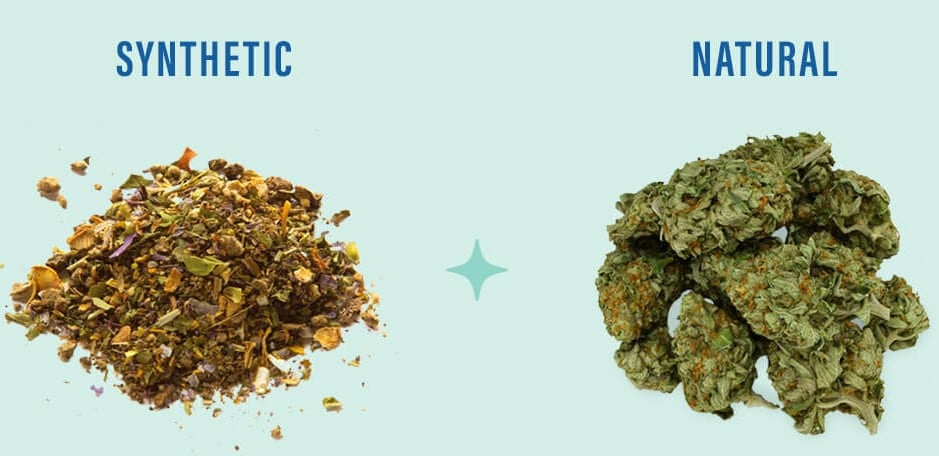
Natural cannabis—commonly known as marijuana—refers to the dried flowers, leaves, stems, and seeds of the plant Cannabis sativa (and occasionally Cannabis indica). Humans have cultivated and used this plant for thousands of years for medicinal, spiritual, and recreational purposes.
Origins and Nature
Cannabis is a complex botanical organism. It produces its active compounds naturally through biological processes, primarily in microscopic glandular structures called trichomes found on the surface of the flowers and leaves. Unlike synthetic products, natural cannabis does not require chemical processing in a laboratory to produce its active effects.
Key Constituents
Natural cannabis contains over 400 identified chemical compounds, of which more than 100 are classified as phytocannabinoids—plant-derived compounds that interact with the body’s endocannabinoid system. The most studied and abundant include:
| Compound | Primary Characteristic |
|---|---|
| Δ⁹-THC | The primary psychoactive component; produces the “high” |
| CBD | Non-psychoactive; widely studied for potential therapeutic benefits |
| CBN | Mildly psychoactive; forms as THC ages/degrades |
| CBG | Often called the “mother cannabinoid”; precursor to others |
| THCV, CBC, CBDV | Minor cannabinoids with unique emerging profiles |
Beyond cannabinoids, natural cannabis contains terpenes (aromatic compounds that also modulate effects), flavonoids, vitamins, minerals, and fatty acids—creating what researchers call the “entourage effect,” where the whole plant works synergistically.
Mechanism of Action
Δ⁹-THC acts as a partial agonist at the CB₁ receptors primarily found in the brain and central nervous system, and CB₂ receptors concentrated in the immune system and peripheral tissues. Being a partial agonist means it binds to these receptors but does not fully activate them—there is a natural “ceiling” on how strongly it can stimulate receptor activity, which inherently limits its intensity.
Potency Range
Traditionally, natural cannabis contained 3–10% THC by dry weight. Modern cultivated varieties can reach 15–25% THC, and concentrated extracts may go higher. Even so, the biological mechanism remains partial agonism—THC simply cannot overwhelm the system in the way synthetic compounds can.
What Are Synthetic Cannabinoids?
Synthetic cannabinoids—sold under names including K2, Spice, Black Mamba, Mojo, and hundreds of others—are laboratory-manufactured chemical compounds engineered to bind to cannabinoid receptors. They are not derived from the cannabis plant at all. Natural Marijuana vs Synthetic Cannabinoid: what’s the Difference?
Marketing Deception
These products are frequently labeled as “herbal incense,” “potpourri,” or “legal alternative to marijuana,” with plant material present solely as a carrier—an inert base sprayed with liquid chemicals. The National Institute on Drug Abuse (NIDA) and the U.S. Drug Enforcement Administration (DEA) have repeatedly emphasized that the term “synthetic marijuana” is misleading and dangerous because it falsely implies similarity to the natural plant.
Chemical Families
Synthetic cannabinoids fall into several distinct chemical classes—naphthoylindoles (e.g., JWH-018), phenylacetylindoles, cyclohexylphenols (e.g., CP-47,497), indazolecarboxamides, and others—none of which share the terpenophenolic structure of natural phytocannabinoids. When one chemical structure gets banned, manufacturers simply tweak the molecular arrangement to create a new, technically unregulated compound—a perpetual “cat-and-mouse” game with regulators.
Mechanism of Action
The critical difference: most illicit synthetic cannabinoids are full agonists at CB₁ receptors. Unlike THC, they can fully activate the receptor, producing a response at maximum capacity. Binding affinity is also drastically higher—some synthetic compounds attach to receptors 40 to 800 times more strongly than natural THC. HU-210, one of the most potent, has been estimated at roughly 800 times the potency of natural THC. Natural Marijuana vs Synthetic Cannabinoid: what’s the Difference?
Lack of Consistency
There is no standard formula. A product bought from the same vendor on consecutive days may contain completely different chemicals at unpredictable concentrations. “Hot spots”—areas where the chemical spray accumulated unevenly—can deliver a massive, accidental overdose from a single pinch of material.
Chemical Components and Specifications: Side-by-Side
| Feature | Natural Cannabis | Synthetic Cannabinoids (Illicit) |
|---|---|---|
| Source | Plant (Cannabis sativa) — biologically produced | Laboratory — chemically synthesized |
| Primary Active Compound | Δ⁹-THC (partial agonist) | Variable — JWH-018, XLR-11, 5F-ADB, etc. (full agonists) |
| Receptor Activity | Partial agonism — built-in intensity ceiling | Full agonism — no ceiling effect; maximal receptor activation |
| CB₁ Binding Affinity | EC₅₀ ≈ 250 nM (moderate) | EC₅₀ ranges from ~5 nM down — up to hundreds of times stronger |
| CBD Content | Present in varying ratios; balances effects | Typically zero CBD — no natural modulating compounds |
| Other Constituents | 100+ cannabinoids, terpenes, flavonoids, lipids | Unknown adulterants, solvents, variable plant carrier material |
| Potency Range | 5–30% THC in flower; concentrates higher | 2–800x THC potency; unknown per-batch concentration |
| Chemical Stability | Consistent within strain; predictable degradation | Rapid structural modification to evade laws; constantly changing |
| Toxicology Detection | Standard drug panels detect THC | Most synthetic variants do not show up on routine screening |
Effects: Natural Cannabis vs. Synthetic Cannabinoids
Acute Effects — Natural Cannabis
When consumed, natural cannabis typically produces:
- Euphoria, relaxation, altered perception of time
- Heightened sensory awareness
- Increased sociability and laughter
- Mild changes in heart rate
- Dry mouth and reddened eyes
- Increased appetite (“the munchies”)
These effects generally last 2–4 hours when smoked, longer when eaten. Fatal overdose from natural cannabis is effectively impossible—the estimated lethal dose is kilograms consumed at once. No reliable medical literature documents death directly attributable to THC toxicity.
Acute Effects — Synthetic Cannabinoids
The experience is qualitatively different and far less predictable. Users frequently report:
- Rapid onset, intense, overwhelming intoxication
- Extreme anxiety, paranoia, panic attacks
- Hallucinations, delusions, and dissociative states
- Violent or agitated behavior
- Rapid heart rate, high blood pressure, chest pain
- Seizures, tremors, loss of consciousness
- Kidney injury, muscle breakdown, and in documented cases, death
Emergency rooms worldwide have reported surges in severe cases linked to synthetic cannabinoids, including strokes, heart attacks, and acute kidney failure in young, otherwise healthy individuals.
Comparative Profile
Long-Term Consequences and Withdrawal Risks
Natural Cannabis
Regular, long-term use of natural cannabis carries risks, including:
- Dependence: Approximately 9% of users develop Cannabis Use Disorder; higher among daily users
- Withdrawal: Symptoms include irritability, insomnia, anxiety, decreased appetite, and mood disturbances. Onset typically 1–3 days after cessation; resolves within 1–2 weeks. Generally described as mild to moderate
- Cognitive impact: Heavy adolescent use may correlate with reduced executive function development
- Respiratory effects: When smoked, similar irritant effects as other plant smoke
- Mental health: Potential exacerbation of underlying psychotic disorders in predisposed individuals
Crucially, CBD-rich cannabis does not appear to produce dependence or withdrawal, highlighting the importance of plant composition.
Synthetic Cannabinoids
Long-term and chronic use carries a significantly heavier burden:
- Dependence: Faster development of tolerance and stronger psychological dependence than natural cannabis
- Withdrawal: More severe and protracted — intense cravings, severe insomnia, profound irritability, mood swings, tremors, sweating, nausea, and in some cases, severe anxiety or depression requiring medical detoxification
- Neurological damage: Persistent memory impairment, cognitive decline, and prolonged psychotic episodes that may not fully resolve
- Organ toxicity: Chronic kidney disease, cardiovascular damage, and respiratory complications
- Psychiatric escalation: Depression, anxiety disorders, and suicidal ideation have been documented in heavy users
Because synthetic compounds are full agonists that desensitize receptors more rapidly and completely, the brain adapts intensely—meaning when use stops, the endocannabinoid system struggles to function normally, producing withdrawal that can be far more debilitating than that from natural cannabis.
Why Potency and Composition Matter
The core of the danger lies in composition and potency—two factors that are reliably predictable with natural cannabis and reliably unpredictable with synthetic products.
The Entourage Effect vs. Isolated Agonism
Natural cannabis works as a biological system. THC may be the star, but CBD, terpenes, and minor cannabinoids modulate its effects—softening anxiety, altering absorption, and balancing intensity. This is the entourage effect, and it does not exist in synthetic cannabinoid products. Synthetic products deliver a single, unopposed chemical hammer with no built-in modulation.
The Potency Gap
To put the numbers in perspective: if a joint of average natural cannabis is a 5 on an intensity scale, some synthetic cannabinoids are a 50 or higher. Worse, because concentrations are unknown and unevenly applied, a user cannot rationally “dose”—there is no way to know whether a pinch contains a mild amount or a lethal amount. This is why experienced cannabis users are disproportionately represented among emergency room admissions for synthetic cannabinoid toxicity: they assume they know what they are consuming.
Detection Failures
Standard employment and medical drug panels test for THC metabolites—not synthetic compounds. This means someone can be under the influence of a powerful, dangerous substance while testing “clean” on conventional screens, creating false confidence and undetected impairment.
The Role of Regulation and Public Awareness
Legal Status Overview
- Natural cannabis: Legal status varies globally from fully legalized (some U.S. states, Thailand, Canada, Uruguay) to decriminalized, medical-only, or strictly prohibited. In most jurisdictions, possession and distribution remain regulated.
- Synthetic cannabinoids: Classified as Schedule I substances in the United States by the DEA—meaning no accepted medical use and high abuse potential. Many countries maintain blanket bans on all psychoactive synthetic cannabinoids. However, because manufacturers alter molecular structures to evade specific bans, enforcement is a persistent challenge. The “analog acts” used to prosecute distributors require proving intent to mimic a controlled substance, which is legally complex.
The Awareness Deficit
The most dangerous aspect of the synthetic cannabinoid trade is its marketing. Calling these substances “synthetic marijuana” or “legal weed” creates a false equivalency. Young people, people with limited resources, and people seeking alternatives to regulated substances are disproportionately targeted. Public health bodies including the World Health Organization (WHO), National Institute on Drug Abuse (NIDA), and Centers for Disease Control and Prevention (CDC) have issued repeated warnings, yet misinformation persists.
Responsibility and Education
At Herbal Spice Shop, we believe education is the most powerful tool in this space. Clear, accessible information bridges the gap between regulatory warnings and everyday understanding. When people know that “Spice” is not cannabis—that it is chemically unrelated and potentially lethal—they make different choices.
Final Thoughts from Herbal Spice Shop
The difference between natural marijuana and synthetic cannabinoids is not merely “natural vs. artificial.” It is the difference between a plant refined by millions of years of evolution and chemicals engineered in a laboratory to maximize potency without regard for safety, balance, or predictability.
Natural cannabis is not without risks—no psychoactive substance is entirely risk-free. But those risks are known, studied, and generally manageable with responsible use. Synthetic cannabinoids, by contrast, represent a gamble with no odds known in advance. Every use is essentially a first-time experiment on one’s own body.
We advocate for clarity in language—let us stop calling these substances “synthetic marijuana.” They are not marijuana. They are not herbal. They are not safe alternatives. They are potent, unpredictable laboratory chemicals, and the distinction saves lives.
As you explore herbal wellness alternatives, remember: nature does not rush. The plant world offers a vast pharmacopeia of beneficial herbs and botanicals. At Herbal Spice Shop, our mission is to connect you with genuine, responsibly sourced herbal products that honor tradition, transparency, and well-being—not lab-made imitations masquerading as nature.
Educate yourself. Protect your friends. Choose natural.
Frequently Asked Questions
Is “synthetic marijuana” the same thing as medical cannabis?
Absolutely not. Medical cannabis uses actual Cannabis sativa plant material or FDA-approved purified cannabinoids (like Epidiolex/CBD or Marinol/synthetic THC for prescription use). Illicit K2/Spice products contain unrelated, unregulated chemicals that are chemically distinct from THC and often hundreds of times more potent.
Can you overdose on natural cannabis?
Fatal overdose from natural cannabis alone is effectively impossible due to the partial agonist mechanism—there is a natural limit to how strongly THC can affect receptors. However, impairment and anxiety can occur at high doses. Synthetic cannabinoids have no such safety limit, and fatal overdoses are well-documented.
Will a drug test show synthetic cannabinoids?
Standard drug panels test for THC metabolites—most synthetic cannabinoids will not be detected. Specialized testing is required, which is rarely used in routine screening. This is one reason why these products are particularly dangerous in workplace and clinical settings.
Is CBD considered a synthetic cannabinoid?
No. CBD from the cannabis or hemp plant is a natural Phyto cannabinoid. CBD can also be synthesized in a lab, but this is different from illicit “Spice” compounds—pharmaceutical-grade synthetic CBD (such as in Epidiolex) is regulated, tested, and non-psychoactive.
Why do people use synthetic cannabinoids if they are so dangerous?
Marketing as “legal,” lower cost, availability in convenience stores/gas stations, belief that they are “natural” or “harmless,” and false confidence that they won’t show up on drug tests all contribute. Public health campaigns are working to correct these misconceptions. Natural Marijuana vs Synthetic Cannabinoid: what’s the Difference?
Authoritative External References
- National Institute on Drug Abuse — Synthetic Cannabinoids
- U.S. DEA — K2/Spice Fact Sheet
- CDC — Cannabis FAQ
- World Health Organization — Cannabis and Cannabis Resin
- National Center for Biotechnology Information — Synthetic Cannabinoids Review
Internal Links
- Visit Herbal Spice Shop — Natural Herbal Products
- About Herbal Spice Shop — Our Mission
- Contact Us — Learn More
