

Uncategorized
Texas Hemp Lawsuit and Synthetic Cannabinoids: What Consumers Should Watch
Oct
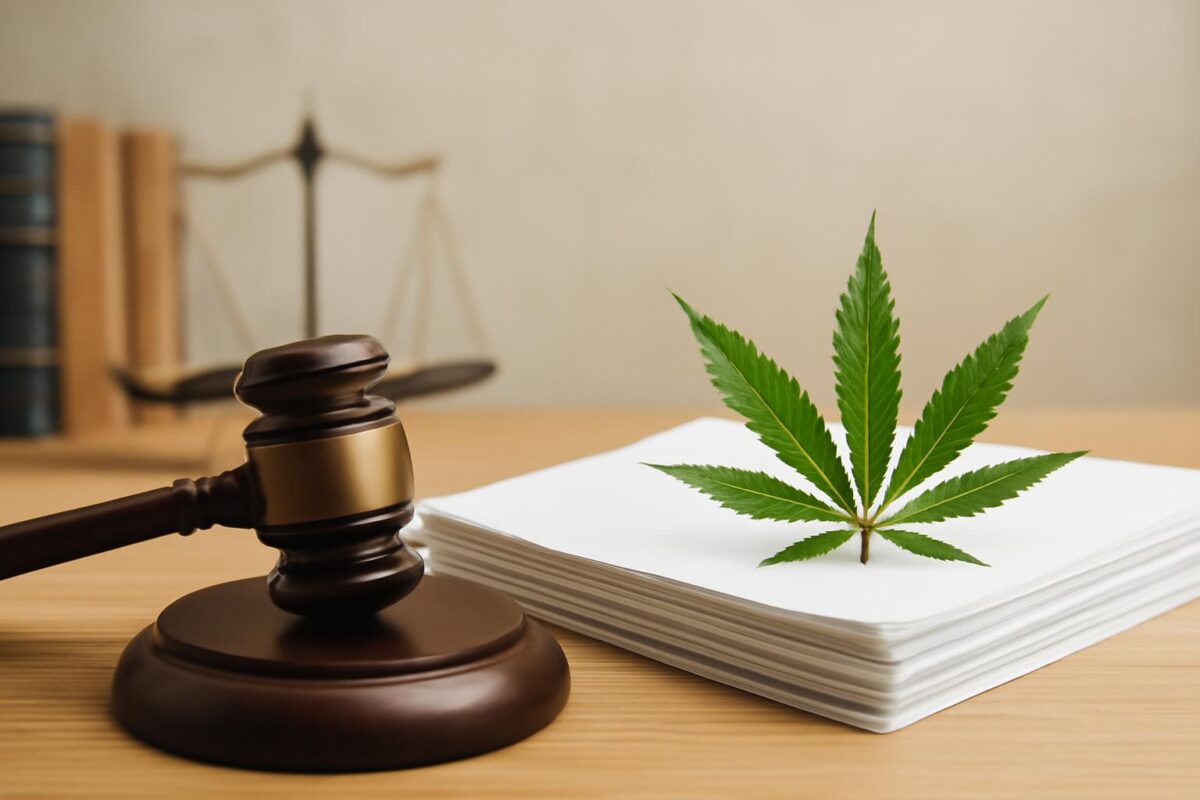
Texas hemp lawsuit synthetic cannabinoids developments are drawing attention because they could affect how hemp-derived cannabinoid products are sold, labeled, tested, and shipped. A court hearing involving Texas hemp businesses and the state health department is scheduled for November 2, according to recent industry reporting. The case is part of a broader national debate about whether certain intoxicating hemp products should remain available under existing hemp definitions or face tighter controls.
This article is a consumer-focused overview, not legal advice. Cannabis and hemp rules can change quickly, and the outcome of a lawsuit may not immediately create a nationwide rule. Before buying, possessing, or shipping any cannabinoid product, check the current law in your state, county, and city.
Why the Texas case matters beyond Texas
Texas is one of the largest and most politically important markets in the United States. A decision affecting hemp businesses there could influence how retailers interpret product rules, how manufacturers formulate new items, and how carriers handle shipments. It may also encourage other states to revisit their own definitions of hemp, marijuana, synthetic cannabinoids, and intoxicating cannabinoid products.
The dispute reflects a basic problem in modern cannabinoid regulation: product names and marketing descriptions do not always reveal the chemistry inside a package. A product may be promoted as hemp-derived, compliant, or a legal high while containing a concentrated or chemically modified cannabinoid that produces powerful effects. In other cases, a product marketed as “herbal incense” may be labeled for fragrance or research purposes but still be associated with dangerous misuse.
That uncertainty is why shoppers should treat legal status and product safety as separate questions. A product can be sold openly in one location and still carry meaningful health, possession, or shipping risks.
What is the legal dispute really about?
At the center of many hemp disputes is the difference between a plant-based product and a chemically altered cannabinoid. Federal hemp definitions have historically focused on the amount of delta-9 THC in a product, but manufacturers have developed a growing range of cannabinoids and cannabinoid derivatives. Some occur naturally in trace amounts, while others are produced through chemical conversion or laboratory synthesis.
This has created several overlapping categories:
- Traditional hemp products: Items such as fiber, seed products, or low-THC extracts that may have limited intoxicating potential.
- Hemp-derived cannabinoids: Cannabinoids extracted from hemp or converted from another cannabinoid, sometimes marketed in vapes, gummies, beverages, or oils.
- Synthetic cannabinoids: Laboratory-made compounds designed to interact with cannabinoid receptors. These are commonly associated with K2, Spice, and fake weed products.
- Research chemicals: Compounds sold with laboratory or analytical disclaimers that may not be approved for human consumption.
These categories are not interchangeable. A hemp-derived product is not automatically safe, and a product sold as “natural” is not necessarily free from synthetic or chemically modified ingredients. Likewise, a label that says “not for human consumption” does not eliminate the need to understand possession laws or health hazards.
How synthetic cannabinoids differ from ordinary hemp products
Synthetic cannabinoids can bind to the body’s cannabinoid receptors in ways that differ substantially from traditional cannabis constituents. Some compounds act as strong full agonists, meaning they can produce intense receptor activity. The result may be less predictable than the effects associated with regulated cannabis products or lower-potency hemp extracts.
Products linked to K2 and Spice have been associated with agitation, confusion, panic, hallucinations, rapid heart rate, seizures, loss of consciousness, kidney injury, and other serious outcomes. The risk is increased when the actual compound is unknown, the concentration varies across a package, or multiple substances are present.
Appearance is not a reliable safety indicator. Dried plant material, colorful packaging, familiar strain names, and professional-looking websites cannot confirm what is in a product. Even a sealed package may contain a formulation that differs from the label if manufacturing controls are weak.
For background on terminology, readers can review the Herbal Spice Shop information hub, while remembering that product descriptions are not a substitute for independent laboratory testing or medical advice.
What the lawsuit could change for retailers
More conservative product screening
Retailers may respond to legal uncertainty by removing products that contain intoxicating hemp derivatives, chemically modified cannabinoids, or incomplete ingredient information. This could affect vapes, disposable devices, gummies, drinks, oils, powders, and liquid products marketed under names such as HHC, THC-O, or other emerging cannabinoid abbreviations.
Some sellers may also stop carrying products described as research chemicals or legal highs, even when a supplier claims they are lawful. A cautious retailer may require a certificate of analysis, manufacturing documentation, age verification, and destination-specific shipping checks before accepting an order.
Stricter labels and batch records
Expect greater attention to batch numbers, expiration dates, ingredient lists, serving sizes, laboratory results, and warnings. A credible certificate of analysis should identify the tested sample, show the laboratory or testing method, and provide measurable results rather than simply stating “passed.”
Testing should ideally address cannabinoid identity and potency as well as contaminants such as pesticides, heavy metals, residual solvents, mold, and microbial contamination. A single test does not prove that every package in a product line is identical, so batch-specific documentation matters.
Changes to shipping policies
Shipping rules may become more restrictive even before a final court decision. Carriers, payment processors, fulfillment companies, and insurance providers can impose policies that are stricter than the minimum legal standard. A retailer may therefore refuse an order to a state where a similar product is available in stores.
Consumers should never assume that an online checkout screen proves a shipment is legal. Responsibility can involve the sender, recipient, carrier, and local jurisdiction. Check the destination state’s current rules and avoid forwarding products across state lines when the legal status is unclear.
What consumers should check before buying
1. The exact chemical identity
Look for a complete ingredient list rather than a brand name, strain name, or flavor description. Terms such as “herbal blend,” “potpourri,” “aromatic liquid,” or “premium incense” do not identify the active chemistry. If the label does not clearly state what is present, treat that uncertainty as a warning sign.
2. A recent, batch-specific laboratory report
Check whether the certificate of analysis matches the product’s batch number and packaging date. Be cautious when a seller provides only a generic QR code, an undated image, or a report for a different product. A laboratory report should be readable and should not conceal non-detectable, missing, or unusually broad results.
3. Clear warnings and age controls
Responsible sellers should provide age verification, product warnings, storage information, and instructions for responding to an adverse reaction. Warning language should not be buried beneath claims that a product is “safe,” “natural,” or “legal everywhere.” No intoxicating cannabinoid is risk-free, particularly for adolescents, pregnant people, or individuals with heart, psychiatric, seizure, or medication-related concerns.
4. The seller’s business information
Check for a verifiable business name, customer-service contact, refund policy, and transparent shipping terms. Anonymous storefronts, pressure to pay through irreversible methods, and claims of guaranteed effects are common reasons to stop. Product reviews can be useful for spotting delivery or packaging problems, but reviews cannot verify chemical safety.
For general store navigation and published site information, the shop’s main resource page is the appropriate starting point. Consumers should still independently confirm the current law and obtain professional health guidance when needed.
What the case does not mean
A hearing does not automatically establish that every hemp-derived cannabinoid is illegal. It also does not mean that all products labeled as synthetic cannabinoids contain the same compound or present the same level of risk. Court proceedings can involve narrow questions about agency authority, enforcement procedure, licensing, or interpretation of a state statute.
Consumers should be skeptical of headlines claiming that a lawsuit has legalized or banned an entire product category overnight. The practical effect may depend on the judge’s order, later appeals, agency guidance, and separate federal or local rules. Retailers may also adopt voluntary restrictions that go beyond the court’s decision.
How to reduce risk while rules remain unsettled
The safest approach is to avoid products with unknown ingredients, unusually strong effect claims, or no independent testing. Do not combine cannabinoid products with alcohol, sedatives, stimulants, or prescription medicines unless a qualified clinician says it is appropriate. Do not drive, operate machinery, or care for another person while impaired.
Keep products in their original packaging and away from children and pets. If someone develops chest pain, severe agitation, trouble breathing, a seizure, extreme drowsiness, or loss of consciousness after using a cannabinoid or herbal product, call emergency services immediately. Do not attempt to induce vomiting or guess at a home remedy.
People who use prescribed medicines or have a history of anxiety, psychosis, cardiovascular disease, or seizures should discuss cannabinoid exposure with a healthcare professional. Synthetic cannabinoid effects can be unpredictable, and a product’s packaging may not reveal the dose or compound involved.
What to watch after the November hearing
Following the Texas hearing, watch for four types of updates: the court’s written order, state health department guidance, retailer shipping changes, and new legislative proposals. Pay attention to the scope of any ruling. It may apply only to the parties in the case, only to certain products, or only to a specific interpretation of Texas law.
Also watch whether regulators focus on total THC, chemically modified cannabinoids, product claims, intoxicating potential, or laboratory standards. Each approach would affect manufacturers and consumers differently. A rule based on product chemistry may reach items that are marketed under several different names, while a rule based only on a label or THC threshold may leave room for continued uncertainty.
Industry terms and product pages can change faster than official rules. If you are comparing herbal incense and cannabinoid-related products, use the information as a starting point rather than proof of legality, purity, or suitability for consumption.
Frequently asked questions
Does the Texas hemp lawsuit ban synthetic cannabinoids nationwide?
No. A Texas lawsuit or hearing does not automatically create a nationwide ban. The effect depends on the court’s order, the parties involved, later appeals, and separate federal and state laws.
Are hemp-derived cannabinoids the same as K2 or Spice?
No. Hemp-derived cannabinoids and K2 or Spice products are different legal and chemical categories, although marketing language can blur the distinction. Consumers should identify the exact compound and review independent testing instead of relying on a product name.
Can a product be legal but unsafe?
Yes. Legal status does not guarantee accurate labeling, consistent potency, contaminant-free manufacturing, or safe effects. A product may also be legal in one jurisdiction and restricted in another.
Is a “not for human consumption” label protective?
No. That wording may indicate that the product has not been approved or evaluated for human use. It does not establish safety, and it does not necessarily resolve possession or distribution questions.
Where can I verify current rules?
Check the current information published by your state health department, attorney general, legislature, and local authorities. For a purchase decision, also review the seller’s batch documentation, ingredient list, age controls, and shipping policy. Rules can change, so avoid relying on an old social-media post or a generic “legal nationwide” claim.
The practical takeaway
The Texas hemp lawsuit is important because it illustrates how quickly cannabinoid categories can become legally and scientifically complicated. Whether the case produces a narrow ruling or a broader policy shift, consumers should focus on the same fundamentals: identify the chemistry, demand current batch testing, verify the destination law, and treat synthetic cannabinoid products as a serious health-risk category rather than an ordinary herbal accessory.
Until regulators and courts provide clearer standards, uncertainty itself is a reason to pause. A professional label, familiar branding, or promise of a legal high cannot replace transparent ingredients, credible testing, and informed medical and legal guidance.
