

Uncategorized
CBD and THC Gummy Federal Ban: Why Synthetic Cannabinoid Labels Need Extra Scrutiny
Nov
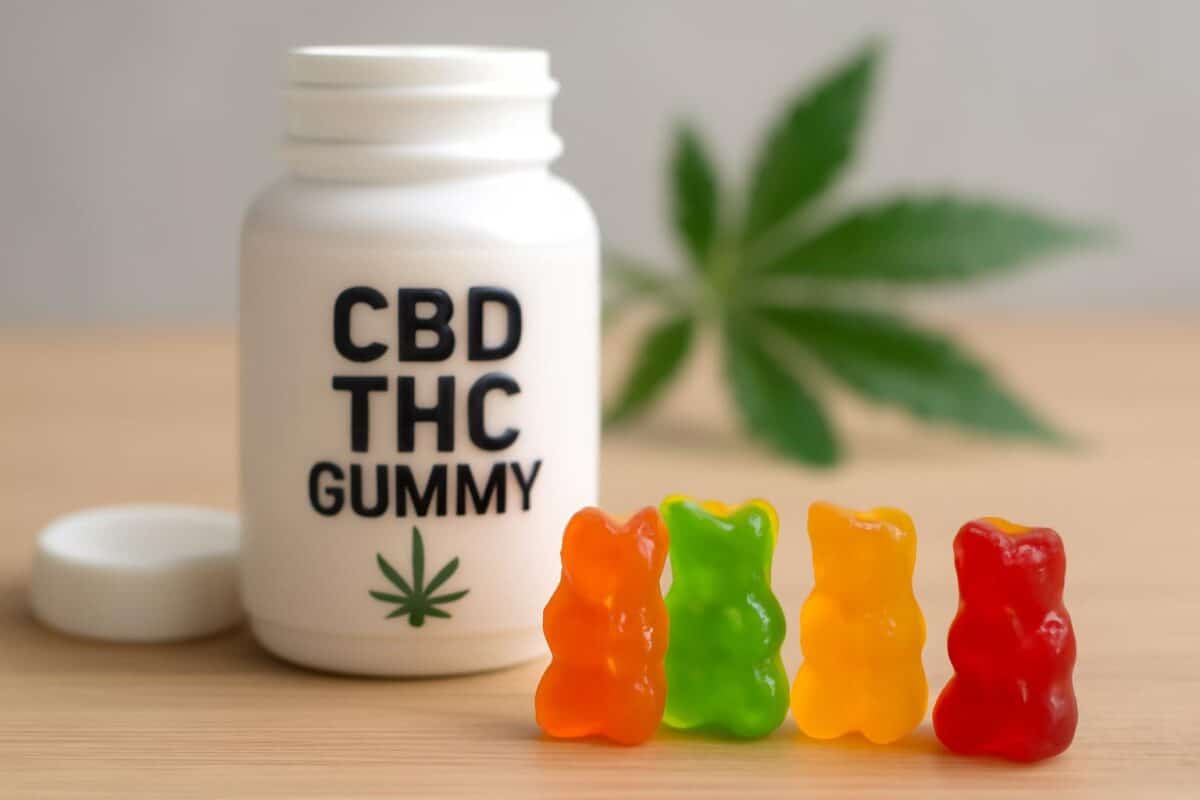
News of a possible CBD THC gummy federal ban has renewed attention on a broader problem: consumers often cannot tell the difference between a regulated cannabinoid product, a hemp-derived intoxicating product, and a synthetic cannabinoid sold under vague “herbal” or “legal high” branding.
Those categories are not interchangeable. CBD is generally associated with non-intoxicating hemp extracts, while THC can produce intoxicating effects. Synthetic cannabinoids are laboratory-made compounds that may act on the same receptor system but can be far more unpredictable than traditional cannabis constituents. Products marketed as K2, Spice, fake weed, or synthetic cannabis have been linked to serious and sometimes rapidly developing health risks.
Any new federal restriction on CBD or THC gummies may change what can be manufactured, advertised, or shipped. It does not automatically make every alternative product safe, legal, or accurately labeled. The most useful response is careful product evaluation, attention to local law, and a clear understanding of what the package does—and does not—prove.
What the reported federal ban could change
News coverage has described a federal policy shift affecting certain CBD and THC edible products. The final effect depends on the text of the law or agency rule, its effective date, enforcement guidance, and any exemptions for particular formulations. Products that were previously sold under a hemp-derived framework may face new limits based on total THC, serving size, product format, or the presence of intoxicating cannabinoids.
Manufacturers and retailers may need to reformulate products, change labels, stop shipping to certain states, or remove products from sale. Customers may also encounter temporary shortages, revised packaging, age-verification requirements, and more complicated shipping policies.
However, a restriction on one class of gummies does not create a safety exemption for other psychoactive products. Some sellers may attempt to redirect shoppers toward unfamiliar research chemicals, liquid herbal incense, sprayed plant material, or products with names that resemble popular cannabis strains. A different label is not evidence of a safer formula.
Why CBD, THC, and synthetic cannabinoids are often confused
CBD is not the same as synthetic cannabis
CBD, or cannabidiol, is a naturally occurring cannabinoid found in cannabis and hemp. It is not generally considered intoxicating in the same way as delta-9 THC. Still, CBD products can vary in purity, concentration, and accuracy. Some may contain measurable THC, other hemp-derived cannabinoids, residual solvents, or contaminants if manufacturing controls are weak.
A CBD label therefore deserves scrutiny, but it should not be used as a synonym for K2 or Spice. Synthetic cannabinoids are chemically distinct laboratory-made substances. Their effects and toxicity can differ substantially from CBD or traditional cannabis compounds.
THC products may be regulated without being risk-free
THC gummies and other cannabis edibles can be subject to testing, packaging, age restrictions, and potency limits in regulated markets. These controls may improve consistency, but they do not eliminate the possibility of impairment, accidental ingestion, medication interactions, or adverse reactions. Edibles can also take longer to affect a person than inhaled products, increasing the risk of taking more before the first dose is felt.
If a federal rule removes a product from the market, that action may reflect legal or policy concerns rather than a scientific finding that every other cannabinoid product is safe. Consumers should assess each product on its own evidence and risk profile.
Synthetic cannabinoids can be mislabeled as herbal incense
The term “herbal incense” has historically been used for fragrant botanical blends, but it has also been used to disguise products containing undisclosed psychoactive chemicals. Packaging may describe an item as “not for human consumption,” “aromatic potpourri,” or a “research product” while using imagery and language that imply intoxication.
This is one reason the words natural, legal, herbal, and laboratory-grade should not be treated as safety guarantees. A product may contain a synthetic cannabinoid even when its branding emphasizes plants, incense, or a familiar strain name.
How to evaluate a cannabinoid product after a policy change
1. Look for a complete, specific ingredient list
A responsible label should identify the active ingredients and their amounts per serving and per package. Be cautious when a package uses only a trade name, a strain-style name, or a phrase such as “proprietary blend.” Those descriptions make it difficult to compare products or identify a potentially dangerous compound.
Names such as HHC, 9H-HHC, 8-OH-HHC, synthetic THC, or other emerging cannabinoid terms require additional research. A chemical name alone does not establish safety, legality, purity, or predictable potency. New compounds may have limited human safety data and may not be included in routine drug screens.
2. Check whether testing is independent and current
A certificate of analysis, often called a COA, is more useful when it comes from an identifiable independent laboratory and matches the exact product batch. Check the laboratory name, report date, batch number, cannabinoid panel, and contaminant testing. A QR code that leads only to a marketing page is not the same as a verifiable laboratory report.
Testing should address more than headline potency. Depending on the product, relevant screens may include pesticides, heavy metals, residual solvents, microbial contamination, and undisclosed synthetic compounds. No single report proves that a product is harmless, but missing or unverifiable testing should increase caution.
3. Read the age, possession, and shipping information
Rules for hemp-derived cannabinoids, THC edibles, synthetic cannabinoids, and research chemicals can differ by country, state, county, and municipality. A seller’s willingness to ship does not prove that possession is lawful where the customer lives.
Before ordering any cannabinoid or aromatic product, review the applicable rules in the destination jurisdiction. Pay attention to restrictions on intoxicating hemp products, analog substances, importation, package labeling, and age verification. Shipping policies may change quickly after a federal announcement, and a package being accepted by a carrier does not resolve the underlying legal question.
For general browsing, the Herbal Spice Shop homepage provides the site’s primary product and information areas. Visitors can also use the site’s category index to understand how available content is organized rather than assuming that every product category has identical legal or safety characteristics.
4. Be skeptical of exaggerated claims
Claims such as “100% safe,” “stronger than cannabis,” “undetectable,” “legal everywhere,” or “no side effects” are warning signs. The same applies to products that promise a guaranteed euphoric effect while avoiding a clear ingredient disclosure.
Marketing may also present customer reviews as proof of safety. Reviews can describe an individual experience, but they cannot verify composition or predict how another person will respond. Product names such as BONZAI Citrus, Caution Anubis, Pineapple Express, or Harley Quinn may identify branding rather than a standardized chemical formula.
Health risks associated with synthetic cannabinoids
Synthetic cannabinoid effects can vary according to the compound, concentration, contaminants, route of exposure, and a person’s health. Reported reactions have included severe anxiety, agitation, confusion, hallucinations, vomiting, rapid heart rate, chest pain, seizures, loss of consciousness, and dangerous changes in blood pressure. In serious cases, kidney injury, breathing problems, severe psychiatric symptoms, or death have been reported.
Risk can be especially difficult to judge when a product is sprayed onto plant material, absorbed into paper, sold as a liquid, or packaged in small unmarked containers. Uneven distribution may create concentrated areas, meaning two portions from the same package may not contain the same amount of active chemical.
Do not assume that a familiar aroma, attractive pouch, or “factory-sealed” presentation confirms the contents. Packaging can be copied, reused, or produced without meaningful quality control.
What to do if someone becomes ill
Seek urgent medical help for chest pain, trouble breathing, seizure, collapse, severe confusion, extreme agitation, loss of consciousness, or symptoms that are rapidly worsening. Call the local emergency number or poison information service and describe the product honestly. Keep the package, label, and remaining material available for clinicians if doing so is safe.
Do not induce vomiting, mix the substance with alcohol or other drugs, or rely on online claims about neutralizing a product. If the person is unconscious but breathing, place them on their side while waiting for help and monitor their breathing. If they are not breathing normally, follow emergency dispatcher instructions.
How retailers and shoppers can reduce confusion
Retailers can improve safety by separating non-intoxicating aromatics from cannabinoid products, using precise ingredient disclosures, maintaining batch records, and removing products with unverifiable laboratory claims. They should avoid marketing language that suggests an item is intended for inhalation or ingestion when the label says otherwise.
Shoppers can help by saving product information before purchase, checking whether the batch report matches the package, and avoiding products that conceal the active compound. It is also wise to review the site’s current policies and educational material; the published post index can help readers locate related discussions about synthetic cannabinoids, product terminology, and changing regulations.
Most importantly, do not treat a federal ban as a product recommendation. When one category becomes restricted, the market may fill with reformulated products and unfamiliar compounds. That transition can increase confusion rather than reduce it.
Frequently asked questions
Does a CBD THC gummy federal ban ban all CBD products?
Not necessarily. The scope depends on the final law or rule, including its definitions, potency thresholds, product categories, exemptions, and enforcement date. Consumers should check current federal and local requirements instead of relying on headlines or old packaging.
Are synthetic cannabinoids the same as THC gummies?
No. THC gummies contain THC or a related cannabinoid, while synthetic cannabinoids are laboratory-made compounds that may act on cannabinoid receptors. Their effects, toxicology, legal status, and testing requirements can be different.
Is “legal high” a reliable safety label?
No. “Legal high” is marketing language, not a scientific safety certification. A substance may be legal in one jurisdiction, restricted in another, or insufficiently studied despite being sold openly.
Can product reviews confirm that a synthetic cannabinoid is safe?
No. Reviews may describe personal reactions, but they cannot verify a product’s contents, dose consistency, contamination profile, or legality. Independent batch testing and transparent ingredient information are more meaningful indicators, although they still cannot eliminate all risk.
The practical takeaway
The reported federal shift affecting CBD and THC gummies is a reminder to distinguish policy changes from health guarantees. Consumers should not respond to new restrictions by moving automatically toward K2, Spice, liquid herbal incense, or unnamed research chemicals. Those products may carry greater uncertainty, particularly when the active ingredients are hidden or the testing cannot be verified.
Read the label, confirm the batch information, check destination laws, avoid exaggerated claims, and treat unfamiliar synthetic cannabinoids as high-uncertainty products. Clear information is the most useful tool when regulations and product names are changing faster than the evidence.
