

Uncategorized
THCA Rule Changes and Synthetic Cannabinoid Confusion: What Consumers Should Know
Oct
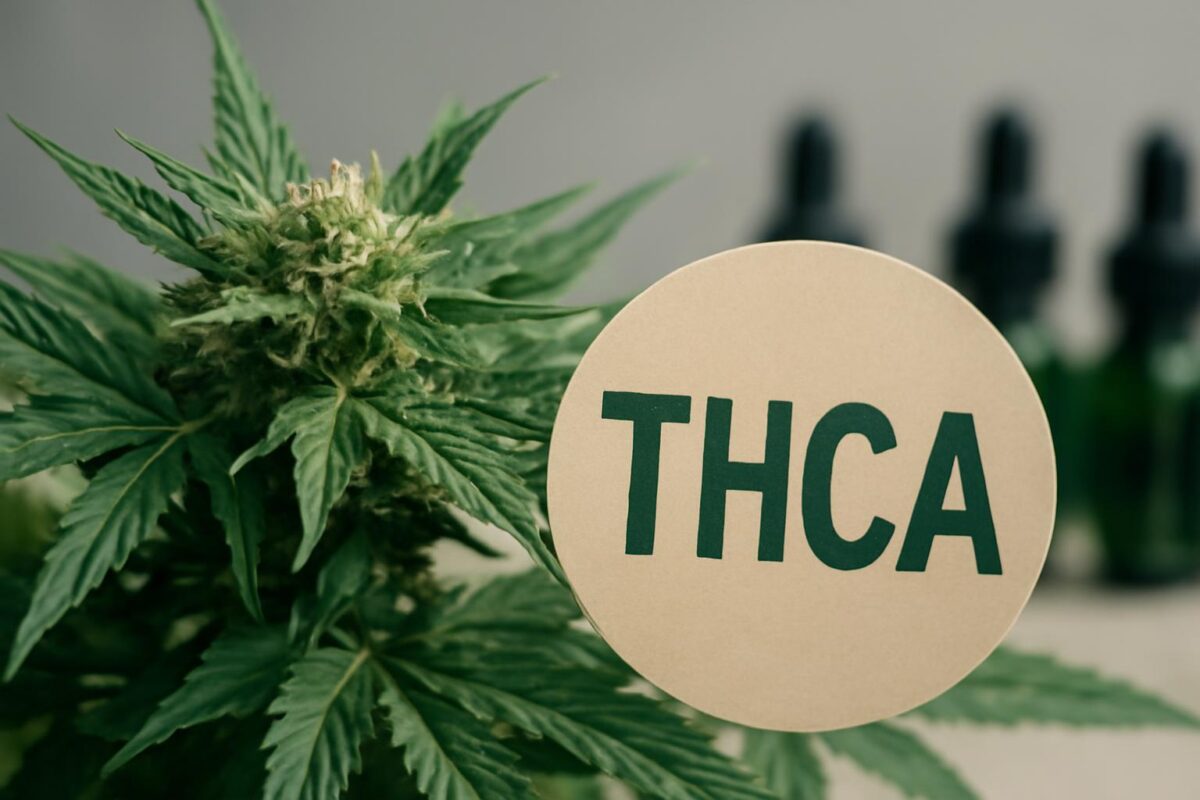
THCA regulation and synthetic cannabinoids are becoming increasingly important topics as lawmakers, hemp organizations, retailers, and consumers debate how cannabinoid products should be defined. Recent legal challenges involving state hemp rules show that the line between hemp-derived products and marijuana-derived products is not always easy to apply in practice.
For consumers, the most important point is simple: a product’s marketing language does not automatically tell you what it contains, how potent it may be, or whether it is legal where you live. Terms such as “hemp-derived,” “legal high,” “THCA,” “Spice,” and “synthetic cannabinoid” can describe very different substances.
This guide explains the issue in plain language, without offering instructions for making, modifying, or consuming synthetic cannabinoid products. It is intended for general education only. Laws change frequently, and anyone buying or handling cannabinoid products should check current rules in their own state and follow the product label.
Why THCA rules are receiving new attention
THCA, or tetrahydrocannabinolic acid, is a naturally occurring cannabinoid found in raw cannabis. It is not intoxicating in the same way as delta-9 THC in its unheated form. However, heat can convert THCA into delta-9 THC, the cannabinoid most commonly associated with cannabis intoxication.
That conversion creates a regulatory challenge. A product may contain a relatively low amount of delta-9 THC when tested in its original state, while containing a much higher potential amount of THC after decarboxylation. Regulators and courts have therefore been examining whether certain products should be measured by their current delta-9 THC content, their potential THC content, or another standard defined by state law.
Recent reporting about hemp groups challenging a Texas rule illustrates the broader conflict. Industry representatives may argue that a new testing or counting method goes beyond existing hemp definitions. Regulators may respond that products capable of producing significant THC effects should be treated consistently with other cannabis products.
The outcome of any individual lawsuit does not automatically establish a nationwide rule. Instead, it highlights why consumers should treat online claims about “legal” cannabinoid products cautiously.
THCA products are not the same as synthetic cannabinoids
One of the most common sources of confusion is the assumption that every potent or hemp-derived cannabinoid is a synthetic cannabinoid. That is not correct.
What THCA means
THCA is a naturally occurring compound produced by cannabis plants. It can be found in flower, extracts, and other cannabis materials. Whether a THCA product is lawful depends on factors such as its source, total cannabinoid content, manufacturing process, labeling, intended use, and the laws of the relevant jurisdiction.
What synthetic cannabinoids mean
Synthetic cannabinoids are laboratory-created chemicals designed to interact with cannabinoid receptors in the body. Some were developed for scientific or pharmaceutical research, while others have appeared in unregulated products sold under names such as K2, Spice, fake weed, or herbal incense.
These substances can differ substantially from plant-based cannabis. A product may contain a chemical with a much stronger or less predictable effect than THC, and the ingredients may vary from one package or batch to another. Packaging that uses words such as “herbal,” “aromatic,” or “not for human consumption” does not make the contents safe.
Our synthetic cannabinoid and herbal incense overview provides additional background on how these product categories are commonly described online. Consumers should still review current public-health and legal information before making decisions about any cannabinoid or incense product.
Why product labels can be misleading
Labeling is one of the most important issues in the current cannabinoid market. A package may use a familiar product name while providing little useful information about the actual ingredients.
Warning signs include:
- No complete ingredient list or batch identification number.
- No recent certificate of analysis from an independent laboratory.
- Laboratory results that do not identify testing methods or detection limits.
- Marketing that promises extreme potency, instant effects, or a guaranteed experience.
- Claims that a product is legal in every state.
- Labels that say “not for human consumption” while promotional material clearly suggests inhalation or ingestion.
- Unclear contact information for the manufacturer or distributor.
A certificate of analysis can be useful, but it is not a guarantee of safety. Consumers should check whether the report matches the exact product, batch, concentration, and package date. A document for one product should not be treated as proof that every item from the same seller has the same contents.
How changing laws affect hemp-derived cannabinoids
Hemp and cannabis laws often rely on precise definitions. Those definitions may refer to plant source, delta-9 THC concentration, total THC, dry weight, intoxicating potential, or a list of prohibited substances. States may also create separate rules for retail sales, age restrictions, testing, packaging, advertising, and shipping.
This means that a product can be treated differently in two neighboring states. A product sold openly in one location may be restricted, age-gated, or prohibited in another. Federal rules may also interact with state laws in ways that are difficult for a casual buyer to interpret.
Consumers should not rely solely on a seller’s statement that an item is “legal.” Before purchasing any hemp-derived cannabinoid, verify:
- Whether the product is allowed in the destination state.
- Whether possession, sale, and shipment are governed by different rules.
- Whether the state measures delta-9 THC alone or total potential THC.
- Whether the product contains converted, modified, or newly synthesized cannabinoids.
- Whether local rules impose additional restrictions.
For broader site navigation, readers can review the available educational posts and product-related articles, while remembering that an online article cannot replace current legal advice.
Where synthetic cannabinoid risks fit into the debate
Legal classification and health risk are related, but they are not the same question. A product may be lawful in one jurisdiction and still carry meaningful health risks. Conversely, a prohibited substance may be difficult to identify because it is sold under vague names or disguised as a non-consumable aromatic product.
Synthetic cannabinoid exposure has been associated with unpredictable effects such as severe anxiety, confusion, agitation, hallucinations, vomiting, rapid heart rate, seizures, loss of consciousness, and other medical emergencies. The risk may be increased when products contain unknown chemicals, uneven concentrations, contaminants, or combinations of substances.
There is also a practical problem: a person may believe they are using a familiar hemp product but receive something entirely different. Attractive packaging, branded names, and colorful descriptions do not establish chemical identity.
Anyone experiencing chest pain, trouble breathing, seizure, severe confusion, extreme agitation, loss of consciousness, or another serious reaction should seek emergency medical help immediately. Do not drive after suspected exposure, and keep the packaging available for medical professionals if it can be done safely.
How to evaluate a cannabinoid product more carefully
Look for transparent labeling
A responsible label should identify the manufacturer, batch number, net contents, cannabinoid profile, and relevant warnings. It should not hide behind a brand name or list only a broad phrase such as “proprietary blend.”
Check independent testing
Testing should cover cannabinoid identity and concentration, as well as contaminants such as pesticides, heavy metals, solvents, and microbial impurities where appropriate. A laboratory report should be recent and traceable to the product being sold.
Be skeptical of exaggerated claims
Promises of guaranteed euphoria, unusually long duration, or effects stronger than conventional cannabis deserve caution. So do claims that a product is “completely safe,” “undetectable,” or legal everywhere.
Consider the route of exposure
Inhaled products can deliver active compounds quickly, while edible products may take longer to produce effects and may last longer. Unknown synthetic chemicals create additional uncertainty regardless of the route. Products marketed as incense, potpourri, or room fragrance should never be inhaled, smoked, or consumed unless the label explicitly and lawfully identifies them as intended for that use.
What retailers and wholesalers should know
Businesses selling herbal incense, hemp-derived products, or other cannabinoid-related merchandise face their own compliance responsibilities. A product that arrives from a distributor with attractive packaging may still lack adequate testing or contain ingredients that are restricted in the destination market.
Retailers should maintain supplier records, review certificates of analysis, monitor rule changes, and avoid advertising products for uses that conflict with their labeling. They should also understand that “research chemical” language does not remove consumer-protection obligations or make a product suitable for human use.
Wholesale buyers should be especially careful with large inventory purchases. A low price or bulk discount is not a substitute for traceability, verified testing, and a clear return or recall process. If a supplier cannot explain what a product contains, where it was manufactured, and how it was tested, the safest business decision may be to reject the shipment.
Information about site categories and broader store sections can be found through the site category index. Product availability and website descriptions should not be interpreted as a guarantee that an item is legal or appropriate in every location.
Frequently asked questions
Is THCA a synthetic cannabinoid?
No. THCA is a naturally occurring cannabis compound. Synthetic cannabinoids are laboratory-created chemicals designed to interact with cannabinoid receptors. However, a product marketed as THCA may contain other cannabinoids or inaccurately reported ingredients, so testing and labeling still matter.
Can a THCA product be legal in one state and illegal in another?
Yes. States can apply different definitions, testing standards, age restrictions, and rules for total or potential THC. Consumers should check current laws in the state where the product will be possessed and used.
Does “hemp-derived” mean a product is safe?
No. “Hemp-derived” describes a source or marketing category, not a complete safety assessment. Products may still be mislabeled, contaminated, highly concentrated, or unsuitable for a particular person.
Are K2 and Spice the same as ordinary cannabis?
No. K2 and Spice are common names associated with products containing synthetic cannabinoids. Their chemical contents can vary, and their effects may be more unpredictable than those of plant-based cannabis.
What should I do if a cannabinoid product causes a severe reaction?
Seek emergency medical assistance for serious symptoms such as difficulty breathing, chest pain, seizure, collapse, or severe confusion. Keep the package or product information available for responders, and do not attempt to treat a dangerous reaction at home.
The practical takeaway
Changing THCA rules demonstrate how quickly the cannabinoid market can move ahead of clear, consistent regulation. Consumers should distinguish naturally occurring THCA from synthetic cannabinoids, avoid relying on marketing claims, verify current local laws, and treat unexplained or poorly labeled products as high risk.
Most importantly, a product sold as herbal incense, a legal high, a research chemical, or a hemp-derived cannabinoid is not automatically safe for human use. Clear labeling, independent testing, responsible retail practices, and cautious decision-making remain essential while lawmakers and courts continue to define the boundaries of the market.
